Clickbaiting history
Lincoln Cushing 4/6/2026, updated 5/3/2026.
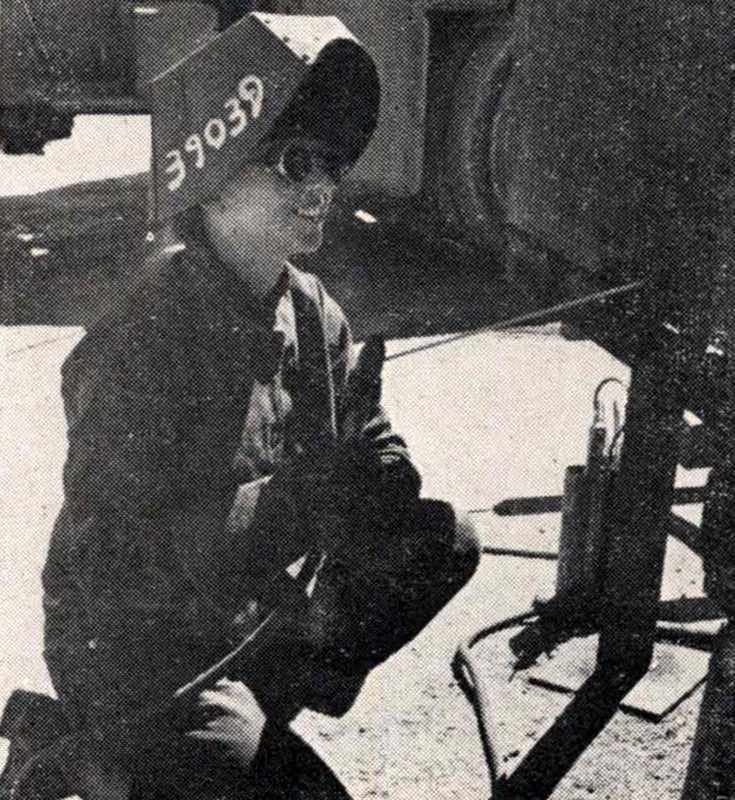
Hidden. Buried. Lost. Forgotten.
It seems that the only way to attract readers to non-fictional narrative is to evoke intrigue and conspiracy. Even the venerable Atlantic magazine print version article titled “The Women of Avenger Field” changed their online version to “The Forgotten Female Pilots of World War II.”
In the social media sphere a persistent story line is about an ordinary person who subverted the standard way of doing things, came up with a clever solution to a problem, and then vanished from public knowledge. It’s an attractive trope, ostensibly honoring the “little people” whose street smarts ends up being better than conventional wisdom. But what happens when such a story, presented as fact, is false?
This February I received a baffled email from an education staffer at Richmond’s Rosie the Riveter/World War II Home Front National Historical Park: “We have had two inquiries from visitors about an incredible story - a welder named Bessie Hamill at Kaiser Shipyard 3 who developed a new welding sequence to solve the issue of cracking Liberty Ships.” Even with a corps of actual vintage WWII “Rosies” in the house the ranger had never before heard this.
I was the historian for the health care provider Kaiser Permanente and had worked closely with the National Park Service. The visitor center was the site of the WWII Kaiser shipyards and the birthplace of group health care in the U.S. I developed displays and interpretation on the WWII home front, a remarkable period of history and included many “forgotten” events and people.
Bessie’s story is not one of them.
Digging into it revealed that the source was a YouTube video "How One Welder’s ’Ridiculous’ Idea Saved 2,500 Ships From Splitting in Half at Sea,” later titled "This Welder’s Ridiculous Trick Let Them Build Warships in 5 Days Instead of 40” posted 10/23/2025. Its visibility was amplified by a 11/26/2025 article "The Woman Who Changed Welding” in a trade publication, MetalForming Magazine.
I was shocked at the errors in the video, and further surprised that the magazine carried the story without any evident fact-checking or research. MetalForming’s editor stood by his writer’s story, without explanation.
What was wrong with this story? Here’s the short version.
1. There’s no claimed YouTube authorship beyond “@WW2ColdSecrets” – no human claiming to have written the text or produced the video.
2. Statements about the problem are alarmist and incorrect. A key document that was not cited was the 1947 Final Report on a Board of Investigation to Inquire into the Design and methods of Construction of Welded Steel Merchant Vessels. Their review of the 4,694 merchant vessels built during the war, only 25 sustained a complete fracture of the “strength deck” or bottom. Of those, eight were lost at sea and two – including the Schenectady – broke in two but were not lost. And the human cost? A total of 26 lives were lost due to structural failures. The commission concluded that locked-in stresses did not contribute materially to the failure of welded ships.
3. Statements about “Bessie Hamill” the heroic yet unknown welder are unverifiable.
No obituary, no interviews, no documents. Without those, where did this story come from? “She requested a meeting with facility supervisors” – how does @WW2ColdSecrets know that? Bessie’s shipyard supervisor's commendation letter? Not shown. Years ago I digitized the Kaiser Richmond shipyard newspapers, and they are full of feel-good stories about workers and their innovations. Women welders were a featured item. Nothing resembling the Hamill story appears.
4. There are no footnotes, only sources unattached to statements. And those sources do not support the claims made. For example, “Oral History Collections, Bancroft Library, UC Berkeley — Rosie the Riveter WWII Oral History Project” contains no references to “Bessie” or this sequence of events. “The SS Schenectady: Broken Ship, Broken Welds” (Naval Engineers Journal, 1990) by John Gamon Soucy does not seem exist; the only related article by this journal was from 1943 – “Structural Failure of The Tanker: S.S. Schenectady” Journal of the American Society for Naval Engineers, 55: 358-361
I even went down a rabbit hole with a blogger on X who also repeated the story. After a lot of correspondence “NFADLR” backed off, posting “There are a few historical women named Bessie Hamill (or similar spellings) in records, including some from earlier or later periods, but the welder associated with shipbuilding innovation is the one featured in these accounts. Some online discussions debate exact details or whether the story has been slightly mythologized over time, but the core narrative of a female welder's welding-sequence insight aiding ship production is widely shared. Her story fits into the broader history of women in wartime industry and serves as an example of how observation and experimentation can drive engineering improvements.”
And there are other examples. A story was recently posted on the anonymously-produced social media site "Old American Life" with the title "The Typing Pool That Saved the Shipyard, 1943." It's another in the genre of clickbait history items, a cool and compelling WWII home front piece about forgotten heroes. Unfortunately, it's pure fakery.
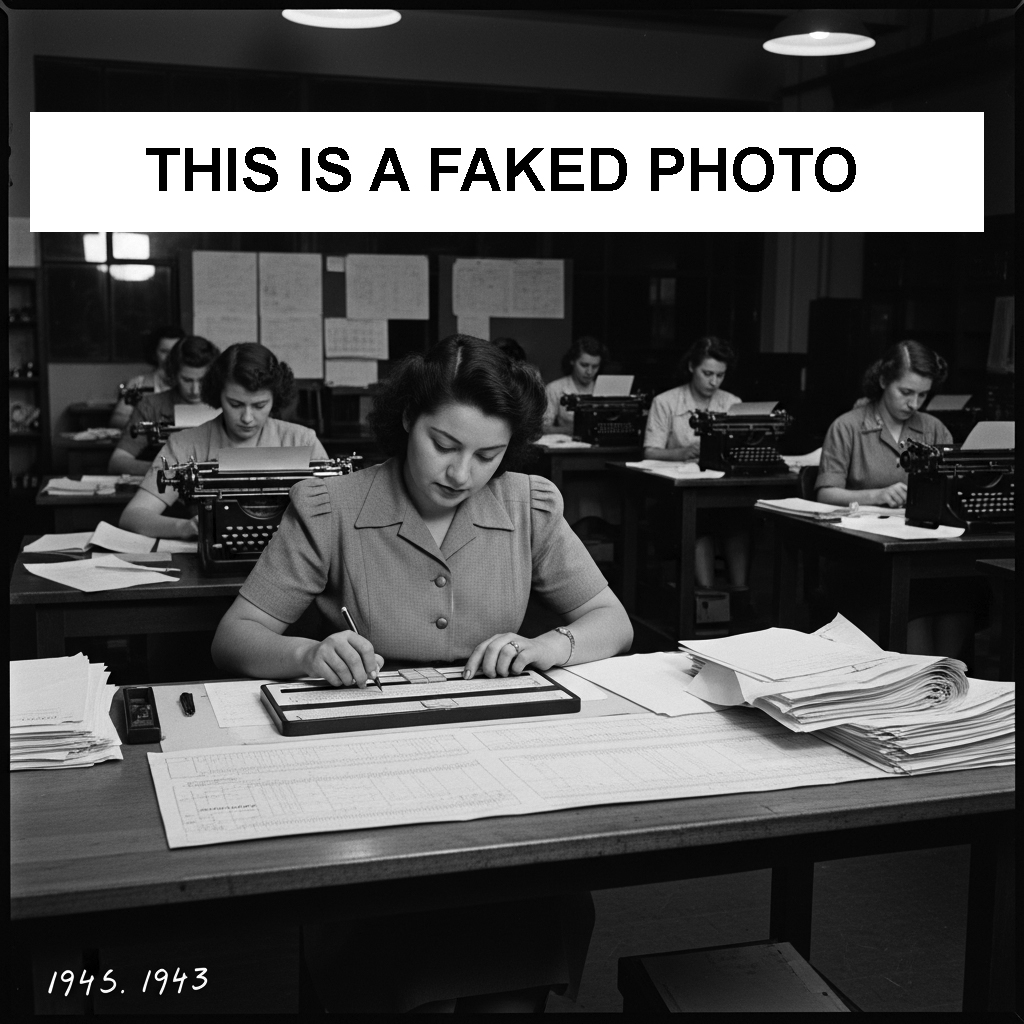
-It alludes to sabotage at the Kaiser Richmond shipyard, but the only known such act was this one.
-It tells about how a diligent typing pool worker recreated a whole Liberty ship blueprint from memory, hull #726. The problem? There is no record of such a ship from the Richmond, or any, shipyard.
-The photo is clearly an AI fake - note how the typewriters face the wrong way.
Why am I so disturbed by this? The "Typing pool" and Hamill stories should be uplifting and empowering feminist examples. The WWII home front was high water mark for women in the trades, with equal pay for equal work the law of the land. It was not perfect, and women were not treated well in many ways, but this fabricated narrative is speculative fiction posing as historical fact. I’m utterly baffled as to why these fake histories were produced.
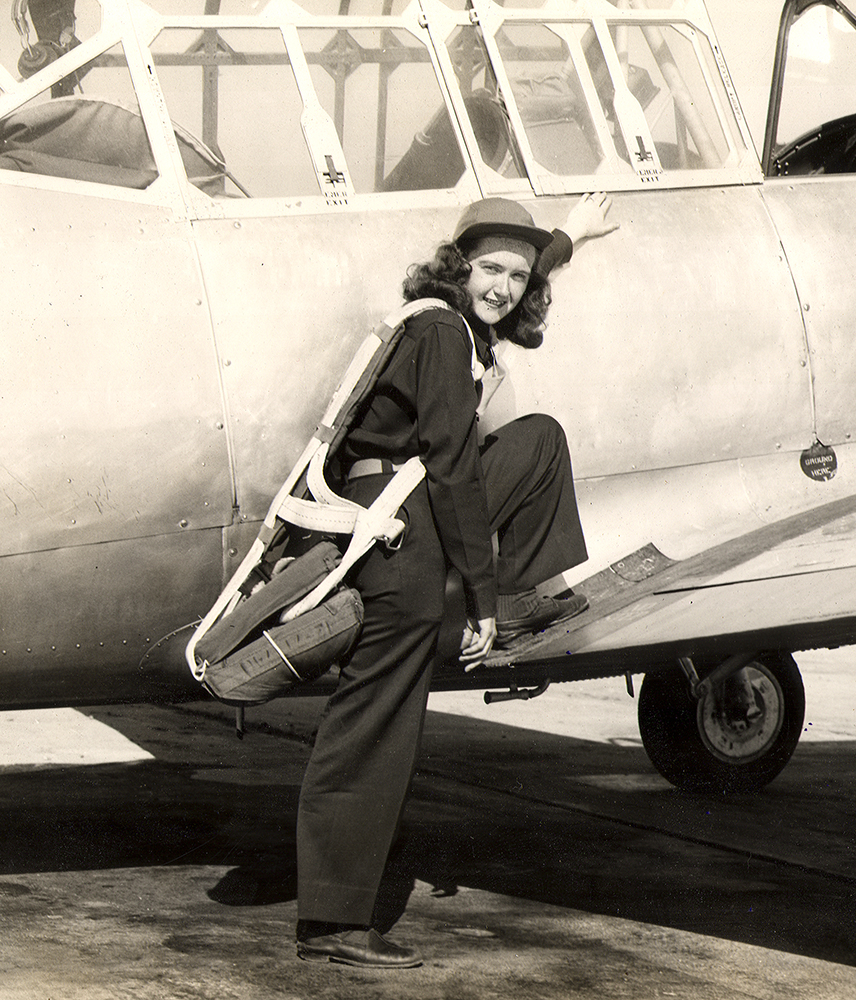
On the other hand, the aforementioned Atlantic article about the Women Airforce Service Pilots, despite the title change, is an excellent example of serious journalism exposing real history that is actively being hidden from us. “The WASPs risked their lives flying for the Army. But for decades, the U.S. government refused to recognize their military service.”
The Atlantic article is by my daughter. Her grandmother Pat Perry flew military planes in the continental U.S. so that male pilots could fight in Europe and the Pacific, but they were not in the military. They were not treated well by the government then, or now. Anti-“woke” efforts have sought to erase them from our history.
Last year I asked the National Museum of the U.S. Air Force why their webpage “1946 Army Air Forces Historical Study No. 55: Women Pilots with the AAF, 1941-1944” 404’d, and was told “Our website is currently being migrated to a new server. In this process, some links may no longer be available until the process is complete. We anticipate full functionality in the near future.” It’s still not there.
Three stories about unsung women’s service during World War II, two vastly different approaches to journalism.
WWII propaganda encouraged citizens to be vigilant. It’s still good advice.-30-
Images:
Louise Cox, Kaiser Richmond shipyard, 1942
Screenshot from
"The Typing Pool That Saved the Shipyard, 1943"
Patricia Jones, Avenger Field, TX, 1943
Return to Docs Populi / Documents for the Public