Cuba, Korea, and liberation art
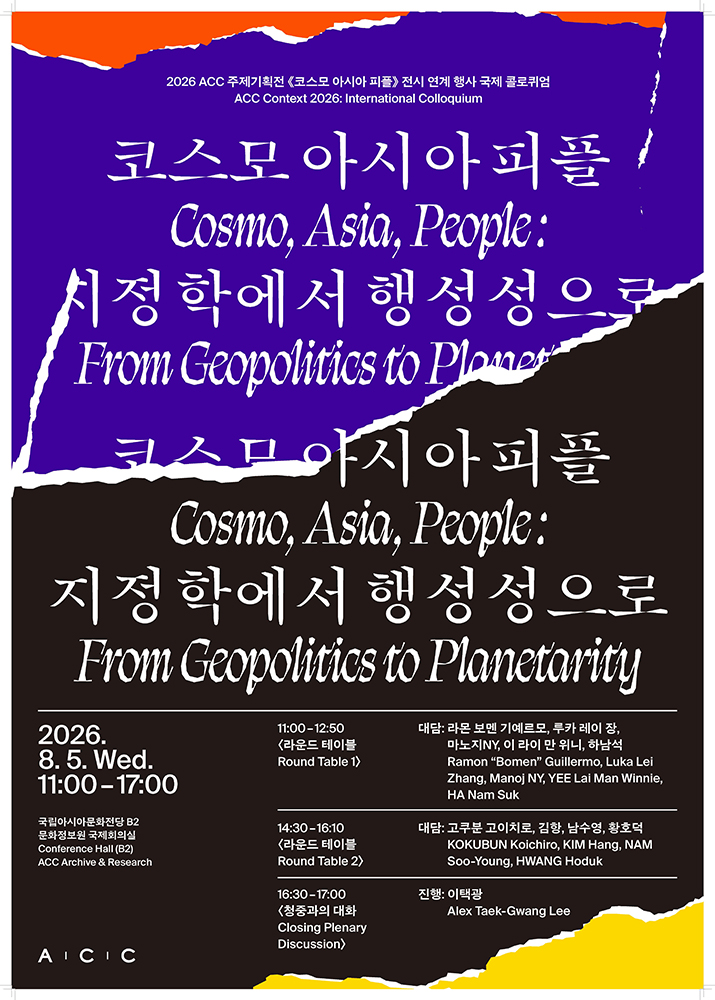
I'm going to South Korea to attend a conference / exhibition “Cosmo, Asia, People: Reinventing People in a Planetary Age” at the National Asian Culture Center in Gwangju May–August. The 20 Cuban posters I loaned are explained in my catalog essay "The vibrant internationalism of Cuba’s OSPAAAL posters" (full text below). The exhibition centers these "long 1960s" posters and displays them with Asian art produced today.
https://www.acc.go.kr/webzine/index.do?lang=en&article=1055
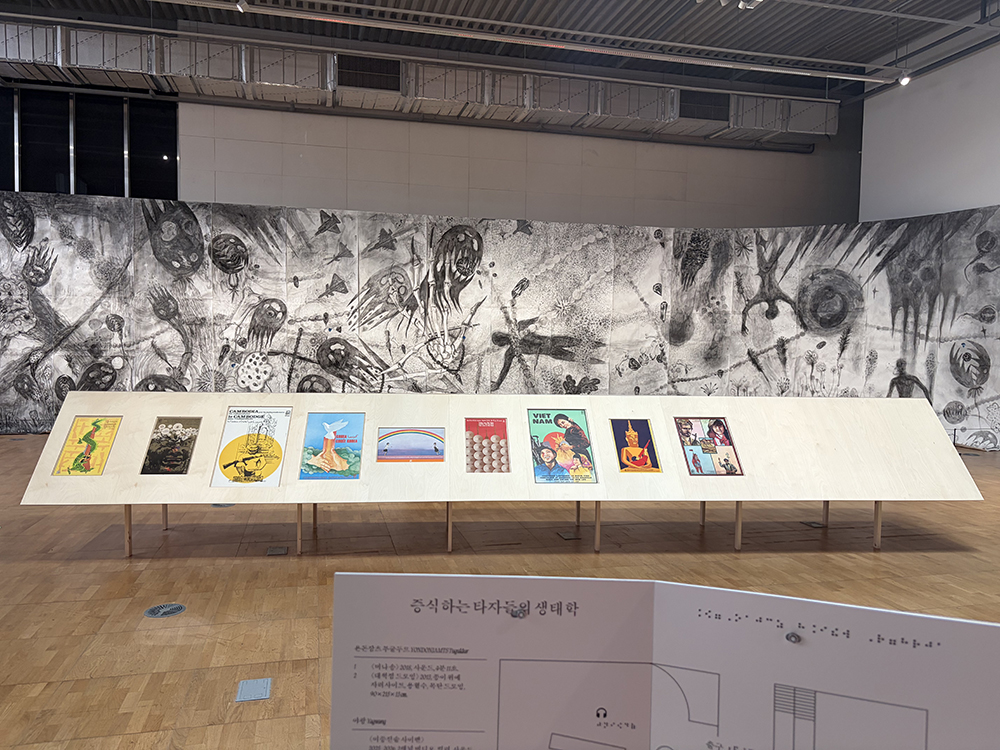
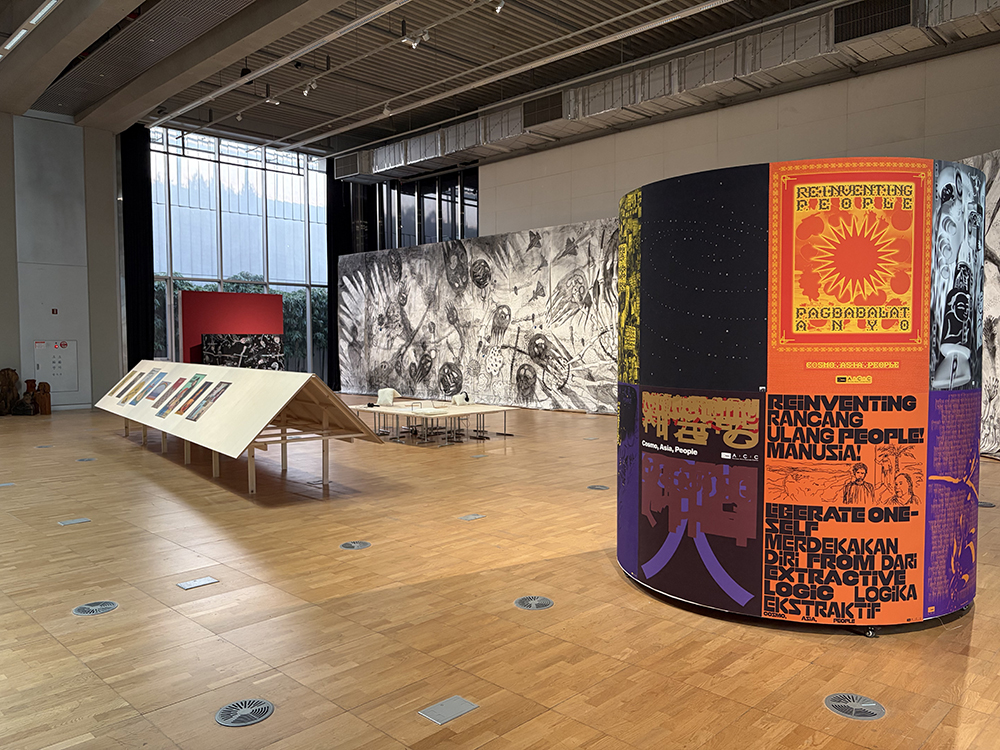
The vibrant internationalism of Cuba’s OSPAAAL posters
“…the purpose of the political poster in Cuba is not simply to build morale. It is to raise and complicate consciousness.” Susan Sontag [footnote 1]
These posters from OSPAAAL (the Organization in Solidarity with the Peoples of Africa, Asia, and Latin America) are powerful examples of graphic design in the service of supporting struggles for national liberation from the late1960s through the 1980s. The increasingly successful U.S. civil rights and antiwar movements mirrored a post-war geopolitical turnover in which nations that were defined as part of the “underdeveloped third world” (today termed as the “Global South” or “developing nations”) shed their colonial legacies and sought new ones. Two of the three most powerful countries on earth—the Soviet Union and the People’s Republic of China—were socialist or communist, and a distinct sense of change filled the air. This was a time that saw the emergence of second-wave feminism, the environmental movement, and the struggle for gay rights. After two decades of dormancy, poster art as an expression of popular culture exploded in the mid-1960s.
They are examples of the media genre often dismissively called “propaganda.” OSPAAAL posters were designed, printed, and distributed by a hybrid of government agencies and nominally “independent” organizations with Cuban or Soviet Union government backing with similar goals, acting as a counterpoint to the politics of the West. The audience was largely young people, a swollen demographic bubble from the post-World War II baby boom.
OSPAAAL was officially a Non-Governmental Organization (NGO) recognized by the United Nations. Based in Havana, its mission was ideologically aligned with that of the Cuban government and was supported as a global extension of its internationalism led by four representatives from each of the three continents. The executive secretariat included a delegate from the Democratic People’s Republic of Korea.
Starting in 1967 it published Tricontinental magazine, with a circulation of 30,000 copies in four languages (English, Spanish, French, and Arabic) and mailed to 87 countries. Folded up (notice the faint fold lines in OSP-001) and inserted into most issues were posters such as those on view here, establishing the world’s most effective international poster distribution system. Although some were limited edition screenprints, those mailed out were offset printed on thin paper. The powerful graphics and potent messaging in multiple languages made these posters instantly accessible to a wide audience. OSPAAAL produced almost 350 different posters before they closed in 2019.
Postrevolutionary Cuba was a major producer of world-class poster art, both from its innovative film board (ICAIC) and from the Communist Party itself. But the distinct body of OSPAAAL’s output stands out as more than mere “propaganda” made by anonymous government bureaucrats. They were designed and produced by a dedicated crew who believed in their mission and were proud to put their names on their art.
These are complex and special because despite being produced by governmental or affiliated agencies, their messages and style resonated strongly with those expressed by grassroots and independent organizations around the world. Almost all the issues championed by OSPAAAL – including the U.S. involvement in the Vietnam war, U.S. support for Chile’s Pinochet dictatorship, Nelson Mandela and the African National Congress in its fight against apartheid [AF-113] (this one colorizes the ANC logo), independence for the U.S. commonwealth of Puerto Rico (absorbed during the Spanish-American War of 1898), and opposition to the 1983 U.S. invasion of Grenada – were eventually found to be on the right side of history. Almost every country represented in these posters was once a part of a European or U.S. empire, and in many cases is still in internal conflict over that historical distortion.
Several of these are excellent examples of distinctive Cuban design – bold graphic images and unexpected juxtaposition of content. Rostgaard’s “Day of solidarity with the Congo (L)” [footnote 2] [AF-036] inserts the profile of revolutionary martyr Patrice Lumumba in the continent of Africa. Jesus Forjans’ “World solidarity with the people of Asia” [AS-002] and “International week of solidarity with Latin America” [LA-006] intermix indigenous resistance images – spears, bows and arrows, simple rifles – with modern weapons. OSPAAAL iconography makes a political distinction between these tools of defense and offensive arms such as aircraft carriers or fighter planes.
Similarly, “Day of solidarity with the people of Laos” [AS-062] and “Day of solidarity with the Arab peoples” [ME-005] bring together ancient culture with contemporary resistance. The date in the latter refers to the Six-Day War between Israel and a coalition of Arab countries (Egypt, Jordan, and Syria) from June 5 to 10, 1967. In the aftermath of conflict over control of the Suez Canal, Israel attacked Egypt and occupied the Sinai Peninsula, Egypt’s Gaza Strip, and Syria’s Golan Heights, displacing hundreds of thousands of civilians and setting the groundwork for the continued war still happening today. The eternal struggle for Palestinian self-determination is concisely captured in Faustino Perez’ 1968 image [ME-041] of a stereotypical Middle Eastern head in profile, with turban, beard – and gun. May 15 refers to the infamous 1948 Nakba Day Palestinian homeland displacement.
A third example is the 1974 Cambodian temple statue [AS-020] grinning with an AK-47.
The geopolitics of the Cold War is shown in “Afghanistan defends its revolution,” [AS-010] produced in the middle of the Afghan War (1978-1992) when Cuba’s ally the Soviet Union supported the government against anti-communist fundamentalist Muslim guerrillas. The atypical painterly style of this poster and its serene portrayal of the Afghan people are witness to that country’s ongoing tragic struggle.
How does one represent a visual critique of an abstract concept such as capitalism? Rafael Enriquez’ 1977 graphic [GEN-005] propels Leonardo DaVinci’s iconic Vitruvian Man into the modern-day chaos of wage slavery. Tricontinental’s third anniversary 1968 [OSP-002] cleverly uses the common children’s paper doll device to suggest the commonality of resistance fighters around the world. Similarly, the 1971 conference poster [OSP-001] stacks them up, collectively forming a rainbow.
Cuban poster text is deliberately brief and often relies on verbal shorthand familiar to contemporary viewers. “Together with Viet Nam – March 13-19” [AS-071] (with bird’s eye view of massed conical bamboo hats and armed troops advancing at the front) uses the word “together” to mean worldwide support of the Vietnamese cause. Its path out of French colonialism was thwarted when, with U.S. government support, Ngo Dinh Diem consolidated his power as the President of South Vietnam in 1955 and declined Geneva Accords request for a national election to unify the country. U.S. president Eisenhower believed the communist leader Ho Chi Minh would have won that election, and the geopolitical Cold War battle between competing ideologies continued to escalate.
As with many OSPAAAL posters, the date being illustrated has historical significance. Here it refers to the Battle of Dien Bien Phu that began on March 13, 1954, and was the turning point for French colonial control. The postwar poster “Build and Defend the New Life” [AS-082] portrays the hope of a peaceful future.
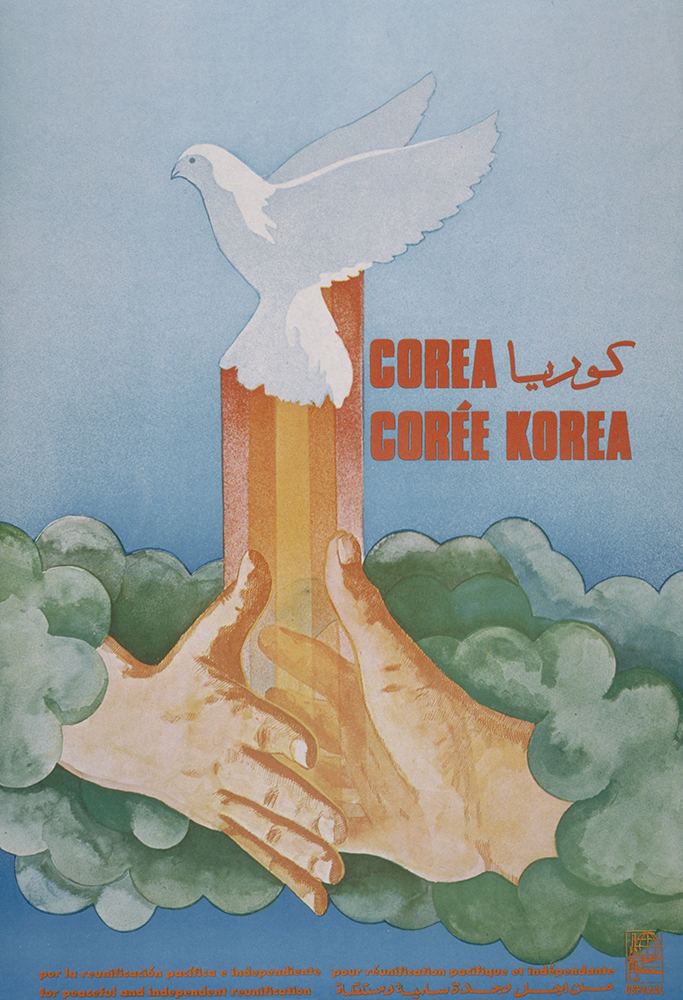
OSPAAAL produced 11 posters about Korea, the first in 1967 among the 26 [footnote 3] issued during Tricontinental’s first year. Two of the most peaceful are shown here - Rafael Enriquez’s dove with clasping hands [AS-040] and Lazaro Abreu’s reunification rainbow [AS-041]. Not included are some of OSPAAAL’s most violent images, one provided by the North Korean delegation in 1969 that so appalled the Cuban OSPAAAL artists that it remains uncredited.
Asia generically was represented in this 1969 poster [AS-001], showing both victims and fighters. September 30, 1965, marks the U.S.-backed Indonesian army coup against President Sukarno and the Indonesian Communist Party, during which at least 300,000 people were killed. Guillermo Menendez’ poster, [AS-031] one of five made about Japan, refers to the tragic date the U.S. dropped the atomic bomb on Hiroshima.
Some of the posters simply promote peace; Rene Portocarrero (1912-1985) was a Cuban modernist artist whose work beautifully illustrates the concept. [GEN-014]
Finally, there’s Che Guevara. OSPAAAL made 27 posters with his image, this one [CHE-021] for OSPAAAL’s 30th anniversary. Ernesto “Che” Guevara is arguably one of the most revered and hated radical figures of the late 20th century. Born in Argentina, his political evolution (including being in Guatemala when President Jacobo Árbenz was murdered) led him to join Fidel Castro in overthrowing the Batista dictatorship in 1959, becoming one of the leaders of the Cuban revolution. His efforts to support uprisings in other countries ended in 1967 when he was killed by government troops in Bolivia. To this day, the Cuban government embraces the mythos of Guevara as a revolutionary hero, often utilizing his image and memory as a means of promoting its message. While many around the world idolize him, others see him as a symbol of an oppressive, violent regime. In 1968, anti-Castro Cubans in New York City bombed the offices of the Grove Press for using an image of Guevara to promote the latest edition of the left-wing periodical the Evergreen Review.
Even as these were being produced and disseminated, they were instantly picked up by external solidarity organizations. Their simple graphic style and bold messaging made them perfect sources for repeating. A 1968 poster supporting the Afro-American People was revised by the U.S. Venceremos Brigade, its message changed to support the African people. A 1972 poster about Vietnam was revised for a U.S. national antiwar mobilization later that same year. A 1973 poster about Puerto Rico (designed by North American artist Jane Norling) was the basis for the Second National Conference of the U.S. Puerto Rican Solidarity Committee in 1977.
These posters are not just snapshots of bygone history, they are potent enough that they continue to offend and inspire.
Offend? Yes. A 2024 exhibition of OSPAAAL posters from the collection of a major museum in New York was cancelled at the last minute because the interpretive curatorial text explaining their own posters was seen as not sufficiently “neutral.”
On the inspiring side of the equation, these images have established a pervasive world presence as iconic graphic art in the service of social justice. As recently as 2024 exhibitions at major U.S. museums have featured OSPAAAL posters, including “Sarah Maldoror: Tricontinental Cinema” at the Wexner Center for the Arts and “A Modernist Regime: Cuban Mid-Century Modern Design” at the Cranbrook Art Museum. In England they were displayed at Liverpool’s International Slavery Museum (2017) and London’s Victoria and Albert Museum (2022). Dozens of these images illustrate books and essays about political studies, history, and art.
But perhaps more importantly, they continue to reach new and young audiences. Cuban posters were the core of a 2017 exhibition at the Work Room Four Gallery in Vietnam, “A Present Retrospective: The historical work of René Mederos and the contemporary responses of artists” which included five contemporary Vietnamese artists who created new artwork in response to Mederos’ prints.
At this moment in history Cuba is experiencing terrible punishment by the U.S government. The National Asian Culture Center is to be commended for including these works and continuing the evolution of social justice artwork. May the participating artists go forth and “complicate consciousness.” This world needs it.
Further reading:
Cushing, Lincoln. 2003. Revolución! : Cuban Poster Art. San Francisco: Chronicle Books.
Frick, Richard, Ulises Estrada, and OSPAAAL (Organization). 2003. The Tricontinental Solidarity Poster. Bern, Switzerland: Commedia-Verlag.
Cushing, Lincoln “Republic of Cuba, 1959-“ in Ginsberg, Mary, ed. 2017. Communist Posters. London, UK: Reaktion Books. Ginsberg, Mary, ed. 2017.
Cushing, Lincoln. 2023. “How Poster Art of the ‘Long 1960s’ Fueled International Solidarity” Brown Journal of World Affairs, Volume xxix, Issue ii
Interference Archive, Lani Hanna, Jen Hoyer, Josh MacPhee, Vero Ordaz, and Sarah Seidman. 2025. Armed by Design. [New edition]. Philadelphia, US, Monterrey, Mex, Ciudad de México, Mex, São Paolo, Brasil: Common Notions ; Coop El Rebozo ; Tumbalacasa ediciones
Posters: in online catalog here
AF-036“Day of solidarity with the Congo (L),” 1972, Alfredo G. Rostgaard
AF-113“Day of solidarity with the people of South Africa - June 26,” 1968, Berta Abelénda Fernández
AS-001“Asia / Week of solidarity with the peoples of Asia,” 1969 (artist unknown)
AS-002“World solidarity with the people of Asia,” 1969, Jesús Forjans Boade
AS-010“Afghanistan defends its revolution,” 1983, Rafael Morante Boyerizo
AS-020“Cambodia - for independence,” 1974, Olivio Martinez Viera
AS-031“Day of solidarity with the Japanese People,” 1969, Guillermo Menendez
AS-040 [Korea- dove] “For peaceful and independent reunification,” 1983, Rafael Enríquez Vega
AS-041 [Korea - rainbow] “For peaceful and independent reunification,” 1969, Lázaro Abreu Padrón
AS-062“Day of solidarity with the people of Laos (October 12),” 1969, Rafael Zarza González
AS-071“Together with Viet Nam,” 1971, Ernesto Padrón Blanco
AS-082“Build and Defend the New Life,” 1982, Rafael Enríquez Vega
CHE-021“OSPAAAL 30th Anniversary 1966-1996,” 1996, Eladio Rivadulla Perez
GEN-005“Capitalism / Denial of human rights,” 1977, Rafael Enríquez Vega
GEN-014“For youth and the future,” 1978, Rene Portocarrero Villiers
LA-006“International week of solidarity with Latin America,” 1969, Jesús Forjans Boade
ME-005“Day of solidarity with the Arab peoples – June 5,” 1968, Berta Abelenda Fernández
ME-041“Day of solidarity with the people of Palestine May 15,” 1968, Faustino Pérez Organero
OSP-001“Tricontinental Conference Anniversary,” 1971, Alfredo G. Rostgaard
OSP-002“Tricontinental conference / 3rd anniversary,” 1968, Alfredo G. Rostgaard
2. Congo (L) refers to the Republic of the Congo (formerly the Belgian Congo) with its capital at Leopoldville
3. There were possibly 27 posters made in 1967. Research on these posters is imperfect and ongoing.
Return to Docs Populi / Documents for the Public
Essay updated 8/14/2026